Under the professional guidance of Éva Marton and Péter Fried, and with two productions planned under the direction of András Almási-Tóth, the Hungarian State Opera’s training programme for young singers resumes its activities in November. Alongside their studies, participants in the Éva Marton International Opera Studio will also appear in the Opera’s repertoire performances.
The Éva Marton International Opera Studio guides emerging singers through every stage of preparing a role, from their initial encounter with the score to its interpretation on stage. Now entering its third season, the programme continues to combine advanced professional training with valuable practical experience gained during rehearsals and performances. Established in 2024, the studio aims to support young artists as they embark on their careers after completing their university studies, offering opportunities to deepen their knowledge and develop their individual artistic identities.
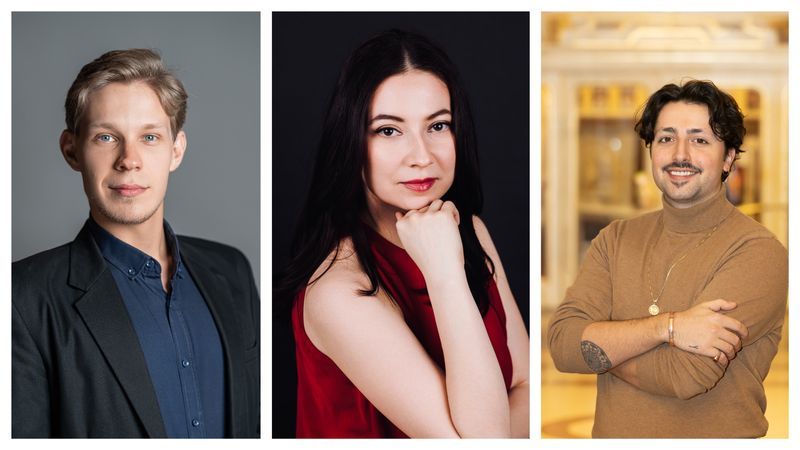
This year, bass Balázs Bán, soprano Ildikó Jávorka, and tenor Balázs Papp join the Opera Studio. Balázs Bán studied under Péter Fried and won the 1st National Opera Competition in 2025. This year, he has also appeared at several prestigious events, including the Innsbruck Festival of Early Music. Ildikó Jávorka studied with Mária Temesi and attracted attention at the 12th Simándy Singing Competition in 2025. Earlier this year, she made her debut as Musetta in Puccini’s La bohème at the National Theatre of Miskolc. In recent years, Balázs Papp has appeared in leading tenor roles at the Budapest Operetta Theatre, while his most recent appearances at the Hungarian State Opera include Pedrillo in Mozart’s Die Entführung aus dem Serail and the male title role in Péter Tóth’s fairy-tale opera Beauty and the Beast. Soprano Lilla Takács and baritone Zhaochi Xu continue their studies at the Opera Studio, having joined the programme last season.
The young singers will once again receive guidance from the studio’s namesake and chief patron, Éva Marton, a Kossuth Prize recipient, Artist of the Nation and Eternal Member and Master Artist of the Hungarian State Opera, as well as Péter Fried. The curriculum continues to include role preparation, coaching sessions with répétiteurs and ballet classes to develop stage movement, while acting is taught by director András Almási-Tóth, the Opera Studio’s artistic director. Vocal training is thus complemented by a systematic approach to developing stage presence, movement and characterisation.
The studio’s collaborative work will centre on two planned productions. During the first semester, András Almási-Tóth intends to present a selection of scenes from Gilbert and Sullivan’s operetta The Pirates of Penzance, followed by Gluck’s opera Armide in the second semester. These two contrasting musical and theatrical worlds will allow participants to explore different performance challenges and apply the skills acquired during their training to fully developed stage interpretations.
Meanwhile, the Opera Studio’s singers will also become involved in the day-to-day artistic activities of the Hungarian State Opera. Lilla Takács will appear as Papagena in Mozart’s Die Zauberflöte and as Stanci in Ede Poldini’s comic opera Love Adrift, while Balázs Bán and Ildikó Jávorka will also have opportunities to make their debuts in smaller roles. By working alongside experienced colleagues throughout rehearsals and performances, the young artists will be able to broaden their range of stage skills and gain further practical experience.